
AI Personalization in Websites: The Future of User-Centric Web Development (2026)
Introduction
In today’s digital landscape, user expectations have evolved beyond static web experiences. Modern users demand websites that understand their preferences, anticipate their needs, and deliver tailored content in real time. This is where AI-powered personalization comes into play.
AI personalization is no longer a luxury—it is a competitive necessity for businesses aiming to improve engagement, conversion rates, and user satisfaction.
What is AI Personalization?
AI personalization refers to the use of artificial intelligence, machine learning, and data analytics to dynamically customize website content, layout, and interactions based on individual user behavior.
Unlike traditional personalization (e.g., showing a user’s name), AI-driven systems analyze:
- Browsing behavior
- Purchase history
- Location data
- Device usage
- Interaction patterns
This allows websites to deliver highly relevant, real-time experiences unique to each visitor.
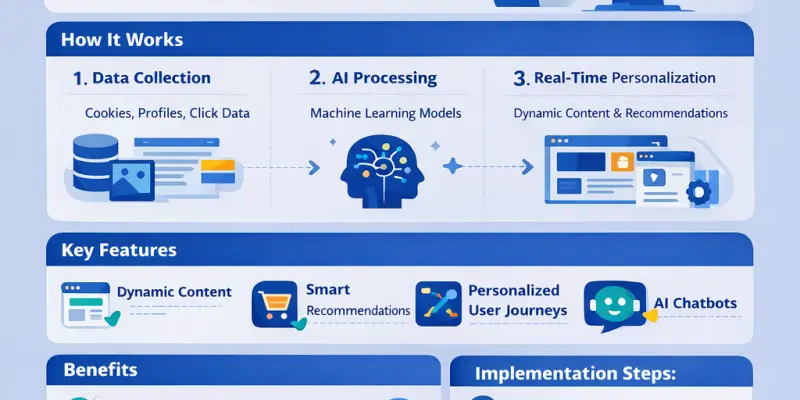
How AI Personalization Works
1. Data Collection
Websites collect user data through:
- Cookies and session tracking
- User accounts and profiles
- Clickstream data (pages visited, time spent)
2. Data Processing with AI Models
Machine learning algorithms process this data to:
- Identify patterns
- Segment users into categories
- Predict future behavior
3. Real-Time Decision Making
AI systems instantly decide:
- What content to display
- Which products to recommend
- How to structure the user interface
Key Features of AI-Personalized Websites
🔹 Dynamic Content Rendering
Content changes based on the user’s interests.
Example: A returning visitor sees different homepage content than a new visitor.
🔹 Smart Product Recommendations
E-commerce platforms suggest products based on user behavior, increasing sales.
🔹 Personalized User Journeys
AI guides users through customized paths, improving navigation and engagement.
🔹 Behavioral Targeting
Advertisements and offers are tailored to individual preferences.
🔹 Chatbots & Virtual Assistants
AI-powered chatbots provide personalized support and recommendations.
Benefits of AI Personalization
✅ Improved User Experience
Users find what they need faster, leading to higher satisfaction.
✅ Increased Conversion Rates
Relevant content drives more purchases and sign-ups.
✅ Higher Engagement
Personalized experiences keep users on your site longer.
✅ Better Customer Retention
Users are more likely to return to a website that “understands” them.
✅ Data-Driven Decisions
Businesses gain insights into user behavior for continuous improvement.
Real-World Use Cases
E-Commerce
- Personalized product recommendations
- Dynamic pricing strategies
- Customized promotions
Content Platforms
- Tailored article suggestions
- Personalized news feeds
SaaS Applications
- Custom dashboards
- Feature recommendations based on usage
Service Websites
- Location-based services
- Personalized landing pages
Technologies Behind AI Personalization
To implement AI personalization, developers use:
- Machine Learning Frameworks (TensorFlow, PyTorch)
- Recommendation Algorithms (collaborative filtering, content-based filtering)
- Customer Data Platforms (CDPs)
- APIs and AI Services (OpenAI, Google AI, AWS AI tools)
Implementation Strategy
Step 1: Define Personalization Goals
- Increase sales?
- Improve engagement?
- Enhance user experience?
Step 2: Collect and Manage Data
Ensure proper data collection while complying with privacy regulations.
Step 3: Choose the Right Tools
Select AI platforms or build custom models depending on your scale.
Step 4: Start Small
Begin with simple personalization (e.g., recommendations) before scaling.
Step 5: Test and Optimize
Use A/B testing to measure performance and refine strategies.
Challenges and Considerations
⚠️ Data Privacy & Compliance
- Must comply with regulations like GDPR
- Transparency with users is essential
⚠️ Data Quality
Poor data leads to inaccurate personalization.
⚠️ Implementation Complexity
AI systems require expertise and infrastructure.
⚠️ Performance Impact
Real-time personalization must not slow down the website.
Future Trends in AI Personalization
- Hyper-Personalization: Even deeper customization using real-time data
- Voice & Conversational Interfaces
- Predictive UX Design
- Emotion AI (Sentiment-Based Personalization)
- Privacy-First Personalization Models
Conclusion
AI personalization in websites is transforming how businesses interact with users. By delivering intelligent and adaptive experiences, companies can significantly boost engagement and conversions.
The future of web development lies in building systems that not only respond—but learn and evolve with users.