
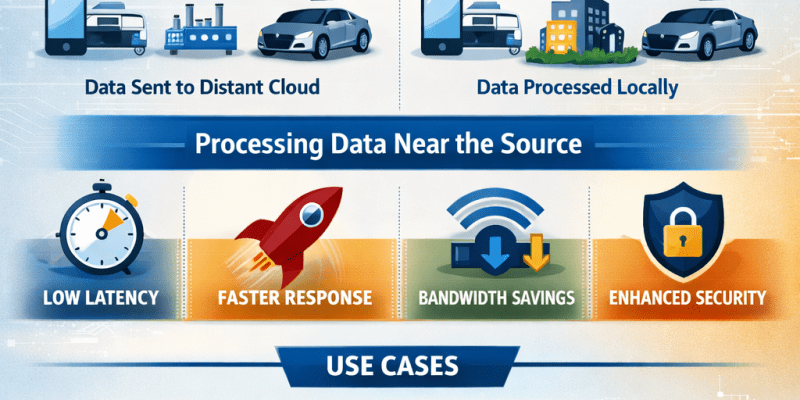
Edge computing is a modern computing approach where data is processed closer to where it is created, instead of sending everything to a centralized cloud or data center.
In simple terms, edge computing brings computing power near the user, device, or data source, which makes systems faster, more reliable, and more efficient.
Why Edge Computing Exists
Traditional cloud computing sends data from devices (like phones, sensors, or cameras) to distant cloud servers for processing. This can cause:
- Delays (latency)
- High internet usage
- Performance issues
- Problems when the internet connection is weak
Edge computing solves these problems by processing data at the “edge” of the network—close to where the data is generated.
How Edge Computing Works
Instead of sending raw data to the cloud:
- Data is collected from devices (IoT sensors, mobile devices, cameras, machines)
- Processing happens locally on:
- Edge servers
- Gateways
- Routers
- Smart devices
- Only important or summarized data is sent to the cloud
This reduces delay and improves performance.
Difference Between Cloud Computing and Edge Computing
| Cloud Computing | Edge Computing |
|---|---|
| Data processed in centralized servers | Data processed near the data source |
| Higher latency | Very low latency |
| Requires constant internet | Can work with limited connectivity |
| Good for large data storage | Good for real-time processing |
👉 Edge computing does not replace the cloud — it works together with it.
Key Components of Edge Computing
1. Edge Devices
These are devices that generate data, such as:
- Sensors
- Cameras
- Smartphones
- Industrial machines
- Smart home devices
2. Edge Nodes / Edge Servers
These are local systems that process data near the devices. They may be:
- On-site servers
- Network gateways
- Mini data centers
3. Cloud (Optional)
The cloud is still used for:
- Long-term data storage
- Analytics
- AI model training
- System management
Benefits of Edge Computing
1. Low Latency
Data is processed instantly, which is critical for:
- Autonomous vehicles
- Online gaming
- Live video streaming
- Smart manufacturing
2. Faster Performance
Applications respond faster because they don’t rely on distant servers.
3. Reduced Bandwidth Usage
Only important data is sent to the cloud, saving internet costs.
4. Improved Reliability
Edge systems can continue working even when the internet is slow or unavailable.
5. Better Security & Privacy
Sensitive data can be processed locally instead of being sent over the internet.
Common Use Cases of Edge Computing
1. Internet of Things (IoT)
Smart devices generate huge amounts of data. Edge computing processes this data locally for quick decisions.
Examples:
- Smart homes
- Smart cities
- Industrial IoT
2. Autonomous Vehicles
Self-driving cars need instant decisions. Edge computing processes sensor data in real time.
3. Healthcare
Edge computing helps with:
- Patient monitoring
- Medical devices
- Real-time alerts
4. Manufacturing
Factories use edge computing for:
- Equipment monitoring
- Predictive maintenance
- Quality control
5. Retail
Used for:
- Smart shelves
- Customer behavior analysis
- Inventory tracking
6. Content Delivery & Streaming
Edge servers deliver content closer to users, reducing buffering and delays.
Edge Computing and Web Development
For web developers, edge computing enables:
- Faster websites
- Low-latency APIs
- Real-time user experiences
- Edge functions (serverless at the edge)
Examples:
- Edge APIs
- Edge caching
- Real-time personalization
Edge Computing vs Fog Computing
- Edge Computing: Processing happens directly on devices or near them.
- Fog Computing: Processing happens between the edge and the cloud.
Both aim to reduce cloud dependency and improve performance.
Challenges of Edge Computing
Despite its benefits, edge computing has challenges:
- Device management complexity
- Security risks if not properly configured
- Limited processing power compared to cloud data centers
- Higher setup and maintenance costs
Tools and Technologies Used in Edge Computing
- Edge servers and gateways
- Kubernetes at the edge
- Serverless edge functions
- AI models deployed on edge devices
- Content Delivery Networks (CDNs)
Future of Edge Computing
Edge computing will grow rapidly due to:
- 5G networks
- IoT expansion
- AI and machine learning
- Smart cities and automation
In the future, more applications will rely on edge computing to deliver real-time, intelligent, and responsive experiences.
Final Thoughts
Edge computing is a powerful technology that brings speed, efficiency, and reliability to modern systems. By processing data closer to users and devices, it enables faster applications, better user experiences, and smarter decision-making.
It is becoming a key foundation of modern web development, cloud computing, and digital transformation.